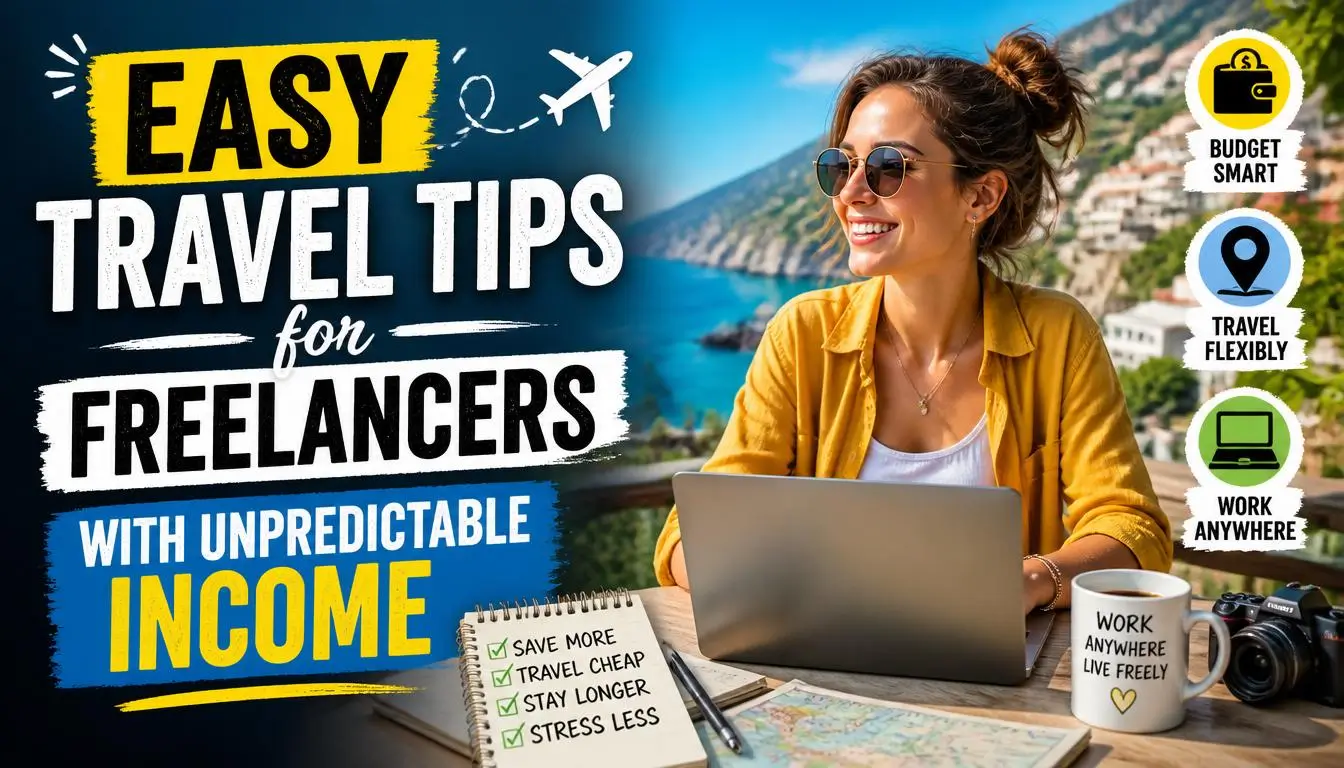
Easy Travel Tips for Freelancers with Unpredictable Income
The hardest part about discovering easy travel tips for freelancers with unpredictable monthly income is managing the mental stress. It is terrifying not knowing if your next paycheck will be $2,000 or $6,000. Trying to plan a massive trip around that financial chaos feels impossible. I have worked as a freelancer for six years and my monthly earnings swing all over the place. I can clear $8,000 during a busy month and struggle to hit $3,000 a few weeks later. I eventually figured out a system that lets me travel consistently without stressing over money or working fourteen hours a day from a cheap hostel in Lisbon.
Build a Travel Fund Separate from Your Emergency Fund
Every smart freelancer knows they need an emergency fund. You need three to six months of living expenses saved up for the inevitable dry spell.
Your travel fund has to be a completely different pot of money. It lives alongside your emergency savings instead of draining it.
I set up a dedicated high-yield savings account just for travel. I transfer ten percent of my paycheck straight into that travel account the second a client pays me. I do that before I pay my rent or buy groceries. That might mean depositing $200 one month and $600 the next. The actual dollar amount changes but the percentage stays exactly the same.
This simple system completely erases any guilt about buying plane tickets. I know I am not stealing from my rent money or my emergency backup plan. This money exists purely to fund my adventures. I book a trip the moment that account hits $2,000. I simply rebuild the balance before looking at flights for the next one.
You absolutely have to automate this process. Set up an automatic bank transfer to move the money immediately. Waiting until the end of the month to transfer whatever is left over guarantees you will never actually save anything.
This system has successfully funded eleven separate trips for me without causing a single financial panic attack.
Travel During Low-Earning Months, Not High Ones
This advice feels totally backwards but it completely changed how I travel.
Your brain wants to book a vacation the second you pull in a massive $7,000 month. Do not do it. A busy month means you need to lock in and work harder. Take on extra client projects and build up a massive cash buffer. You know a slow month is waiting just around the corner.
You should pack your bags during a $2,500 month when the client emails stop coming in.
You are barely making any money anyway. Sitting at your home desk refreshing an empty inbox just builds anxiety. Take that slow time and head to a cheaper country where your smaller income goes much further.
My best trips always happen during major dry spells. I spent a month in Mexico when my January contracts dried up. I spent three weeks exploring Portugal during the traditional summer slowdown. I hid out in Thailand for two weeks between major client projects.
Stepping away provides a massive mental reset. I always return home feeling energized and full of new ideas. Ironically my inbox is usually full of new client requests when I get back. Staring at your computer during a slow month just breeds a scarcity mindset. Walking away proves that your time is valuable even when nobody is currently paying for it.
Choose Destinations Cheaper Than Your Home Base
You cannot afford to visit expensive cities when your income fluctuates this wildly.
I live in a mid-sized American city. Rent for my one-bedroom apartment runs about $1,100. Groceries cost me another $300 a month. My total baseline living expense hovers right around $2,500.
I only book trips to places that cost significantly less than my normal life. I look at spots like Oaxaca, Chiang Mai, Lisbon, Da Nang, and Medellín.
I can rent a fully furnished apartment in those cities for roughly $500 a month. Eating amazing local food costs maybe $300. I can easily cover all my expenses for under $1,500. That means I actually save a thousand dollars a month just by leaving my hometown.
Traveling suddenly becomes financially neutral or even profitable. I am not draining my savings to take a vacation. I am just lowering my monthly burn rate while exploring a brand new country.
This specific math only works if you keep working while you travel. Taking a full vacation with zero income changes everything. But picking a cheap destination is absolutely mandatory for a working freelancer.
Stay far away from brutal cities like London or Tokyo. They are incredibly cool but they will drain your bank account in days.
Book Refundable or Flexible Accommodation
Freelance money is completely unpredictable in both amount and timing.
A client promises to pay on Friday and the check finally arrives three weeks later. A quick two-week project suddenly drags on for two months. An invoice you mailed in March finally clears the bank in May.
Booking a non-refundable hotel room forces you to commit money before it actually hits your checking account.
I refuse to book anything that lacks a flexible cancellation policy.
Airbnb makes it very easy to filter for hosts who offer free cancellation right up until check-in. Booking.com clearly marks which hotels allow you to back out without a penalty. I always ignore the cheaper non-refundable deals unless I already have the exact amount of cash sitting in my travel account.
Paying a few extra dollars upfront for flexibility saves me from massive stress later. If a client payment gets delayed I can just push my trip back a week. If a massive new project lands on my desk I can shorten my trip without losing my deposit.
Paying for flexibility is essential when your income is completely inflexible.
Work Four Hours Daily, Travel the Rest
The fastest way to burn out while working abroad is trying to mimic your normal office schedule.
You simply cannot do it. You should not even try.
I force myself to work exactly four highly focused hours a day while traveling. I usually log on from 8 a.m. until noon. Sometimes I switch to a late evening shift if I want to explore during the morning.
Working four hours with zero distractions produces way more value than working eight hours while checking Instagram every five minutes. I completely shut down Slack and put my phone on silent. I use website blockers to keep me off social media. I just sit down and execute the work.
I spend the rest of my day actually experiencing the city. I walk through local markets and visit museums. I eat great food and talk to other travelers.
Working ten hours a day from a beautiful foreign city is just depressing. You are not actually traveling. You are just working remotely in a room you paid too much for.
You have to set strict boundaries with your clients. I tell them exactly which hours I will be online to answer questions. Most of them completely respect the schedule. The ones who demand constant attention are usually not worth keeping around anyway.
Your overall income might drop a tiny bit when you cut your hours. The massive upgrade in your daily quality of life is totally worth it. I actually find that my hourly rate increases on the road because I feel sharper and much more creative.
Use Coworking Day Passes Instead of Monthly Memberships
Coworking spaces offer amazing Wi-Fi and a great chance to meet other remote workers. Signing up for a full month usually costs between $100 and $300.
That monthly fee makes zero sense if you are only staying in town for two weeks. Buying daily passes is a much smarter move.
Almost every major coworking spot sells a day pass for roughly fifteen bucks. I just buy them on the days I actually need to get out of the apartment.
Some weeks I might buy three passes. Other weeks I just work from my kitchen table or hit a local cafe. I refuse to lock myself into a monthly contract for a desk I might barely use.
I always check Coworker.com or scan Google Maps to find the best spots before I even arrive in a new city.
A monthly membership only becomes worth the money if you plan to stay in one neighborhood for over two months.
Working from a coffee shop is totally fine for quick tasks. But the guilt definitely starts creeping in when you occupy a table for four hours after buying one single espresso. A day pass fixes that problem completely.
Front-Load Work Before You Leave
I work like an absolute maniac during the week leading up to a trip.
This strategy does two huge things for me. It builds up a nice little cash buffer right before I leave. It also drastically reduces the amount of heavy lifting I have to do while I am actually traveling.
I force myself to finish rough drafts early. I batch all my social media content together. I clear out every single tiny task sitting on my to-do list. The ultimate goal is to arrive at the airport with nothing but basic maintenance tasks left on my plate.
It is completely exhausting. I regularly pull sixty-hour weeks right before a flight. But that heavy push buys me total freedom once I land.
The first three days of any trip are completely useless for work. You are fighting jet lag and trying to figure out how the local grocery store works. Trying to juggle an urgent client deadline while navigating a new city will give you a panic attack.
Front-loading the heavy work lets you ease into the vacation. You can take a few days to get your bearings and start working from a place of total calm.
Track Spending Obsessively While Traveling
You have to watch your wallet like a hawk when your paychecks bounce around.
I use an app called Trail Wallet to log every single penny I spend on the road. I track my grocery runs and my daily coffees. Entering an expense takes me about thirty seconds.
I sit down at the end of every week and review the numbers. Am I blowing past my budget? Did I actually spend less than I planned?
Checking the math prevents that horrible moment where you get home and realize you accidentally burned through three grand in a single week.
Tracking also exposes your worst habits. I always assumed restaurants were draining my budget. The app proved I was actually bleeding cash on random Uber rides and overpriced coffees. I fixed the problem by walking more and bringing my own water bottle to the coworking space.
You do not need fancy software to do this. A basic spreadsheet or a notes app works perfectly fine.
You just need total awareness. You cannot fix a problem you refuse to look at. Knowing exactly where your money goes is your ultimate safety net.
Have a “Come Home Early” Plan
Sometimes a trip just needs to end abruptly. A massive client might call with an urgent project you cannot refuse. Your monthly income might tank and force you to cut expenses quickly. Sometimes you just arrive in a new city and absolutely hate the vibe.
Building an emergency exit plan removes the pressure to stay in a bad situation.
I almost always book one-way flights or buy tickets that allow free date changes. A one-way ticket definitely costs a little more upfront. But it gives me the ultimate freedom to extend my stay or bail out early without paying massive penalty fees.
I also keep a running list of things I need to accomplish back home. It includes deep work projects that require my massive desktop monitors or local networking events I want to attend.
Having that list makes pulling the ripcord feel much less like a failure. Coming home early is not a defeat. It is just a strategic business pivot.
I have bailed on two trips over the last six years. Both decisions were totally correct. One client offered me a $4,500 rush project that required me to be back in my home office. Ending the trip three weeks early was a total no-brainer. The other time I just felt totally depressed in my rental and decided to cut my losses.
Having total flexibility is the definition of real freedom.
Establish Income Triggers for Different Travel Styles
Not every trip requires the same budget. I built a three-tier system based entirely on my recent earnings.
Tier 1: High income month ($6,000+)
I treat myself to a premium Airbnb in the best neighborhood. I eat at nice restaurants and pay for guided tours without stressing over the daily math.
Tier 2: Average income month ($3,500 to $5,999)
I book a standard mid-range apartment. I cook most of my meals in the kitchen and keep a very close eye on my daily spending limit.
Tier 3: Low income month (under $3,500)
I either cancel my travel plans completely or head straight to a dirt-cheap rural town in Mexico. I rent the most basic room available and cook every single meal myself. The trip becomes a pure cost-saving exercise.
These are not unbreakable laws. They just provide a solid framework. I am never going to book a luxury loft in Lisbon after pulling in a weak $2,800 month. That is just begging for financial ruin.
Matching your travel style to your current bank balance keeps everything sustainable.
Work with Recurring Clients to Stabilize Income
Relying entirely on one-off projects guarantees financial anxiety. You might juggle three massive contracts in May and have absolutely nothing to do in June.
Landing recurring retainer clients completely fixes this problem.
I spent years building my business around clients who pay me a flat fee every single month for ongoing work. That might mean writing a set number of blog posts or offering weekly consulting calls.
Those retainer checks create my absolute baseline income. If those regular clients guarantee me $3,500 a month then I know exactly what my floor looks like. Any extra project work just becomes bonus cash.
Knowing your financial floor makes planning trips incredibly easy. I can confidently budget my travel around that guaranteed money. The bonus project cash just pays for nicer dinners or an extra week on the road.
If you only do project work right now you need to start pitching monthly retainers. Pitch it to your clients as guaranteed ongoing support. Most companies actually prefer paying a predictable monthly rate instead of dealing with random surprise invoices.
Building up that recurring revenue takes serious time. It is also the single best way to cure a freelancer’s financial anxiety.
Frequently Asked Questions
How much should freelancers save before taking their first trip?
You need to save at least three months of normal living expenses plus the total estimated cost of your trip. If your normal life costs $2,500 a month and your trip will cost $2,000 then you need to have $9,500 sitting in the bank before you leave. That massive buffer guarantees you will not panic if all your clients suddenly disappear while you are away.
Can you travel full-time as a freelancer with inconsistent income?
You absolutely can. It just requires you to rely on very cheap destinations and accept that you will spend some months working way more than you travel. You have to let your lifestyle flex with your bank account. A great month buys you nice dinners. A terrible month means you cook pasta in a cheap hostel kitchen.
What are the best easy travel tips for freelancers with unpredictable monthly income who have never traveled while working?
Book a simple two-week test run to a cheap spot like Mexico. Do not commit to a massive three-month European tour right out of the gate. Use that short trip to test your Wi-Fi setup and figure out how many hours you can actually work on the road without burning out.
How do you handle client time zones when traveling as a freelancer?
I establish core working hours that overlap with my biggest clients. I always make sure I am online between 9 a.m. and 1 p.m. Eastern time no matter where I am on the map. That means working late nights in Europe or waking up at dawn in Asia. Using tools like Slack and email prevents the need for constant live video calls.
Should freelancers travel during busy work periods or slow ones?
Always pack your bags during the slow periods. Grind as hard as possible when the work is flowing. Use the natural dry spells to explore a new city. That prevents you from juggling a massive workload while trying to figure out a foreign subway system.
The Bottom Line
Dealing with a roller coaster income does not mean you have to stay home. You just need to build a strategy that a regular salaried employee would never understand. Fund your travel account automatically and match your destinations to your recent paychecks. Stop aiming for the perfect flawless itinerary. The real goal is just keeping yourself moving without destroying your bank account or your mental health.